
The prevalence of overweight and obesity is largely driven by the widespread availability of high-calorie and highly palatable foods. Even without feeling hungry, some people tend to eat food for the taste. This pleasure-driven eating leading to overeating, which is a major contributor to obesity.
A study published in Nature Communications and led by ZHU Yingjie from the Shenzhen Institute of Advanced Technology (SIAT) of the Chinese Academy of Sciences discovered that activating the lateral septum (LS) inhibits hedonic feeding. The LS acts as a "brake system" within the brain's feeding-regulation network and represents a potential target for preventing and treating obesity.
Researchers found that the long-term consumption of high-fat foods caused obesity rapidly in mice. Meanwhile, they found a significant decline in the function of GABAergic neurons in the lateral septum. The expression of two genes was markedly reduced in these neurons: hyperpolarization-activated cyclic nucleotide-gated cation channel 1 (Hcn1) which regulates neuronal excitability, and glutamate decarboxylase 2 (Gad2) responsible for synthesizing inhibitory neurotransmitter GABA.
Through single-cell calcium imaging and patch-clamp recordings, researchers confirmed a downregulation of excitability in lateral septum neurons in obese mice. They found that the downregulation of the Hcn1 gene was a major cause of this reduced neuronal activity. Restoring Hcn1 expression effectively suppressed binge eating behaviors induced by high-fat diets in mice, thereby preventing obesity.
Moreover, researchers showed that the reduction in Gad2 led to decreased GABA synthesis in the LS, weakening its "inhibitory signals" to downstream brain regions. Restoring Gad2 expression re-enhanced the inhibitory output, preventing overeating and obesity caused by high-fat diets.
The study provides new targets for precise interventions in hedonic feeding-induced obesity.
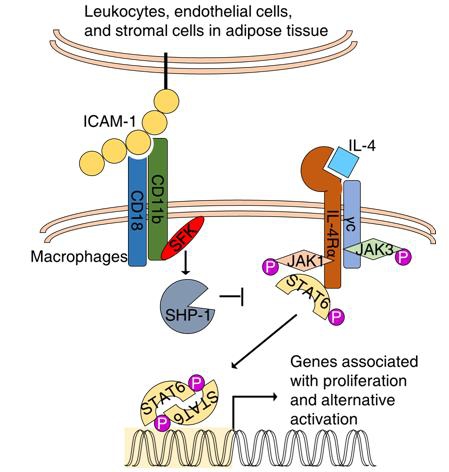
A team led by Drs. SHI Yufang and WANG Ying of the Institute of Health Sciences, Shanghai Institutes for Biological Sciences under Chinese Academy of Sciences just reported that CD11b (integrin αM) is important in mediating monocyte immigration into adipose tissue.
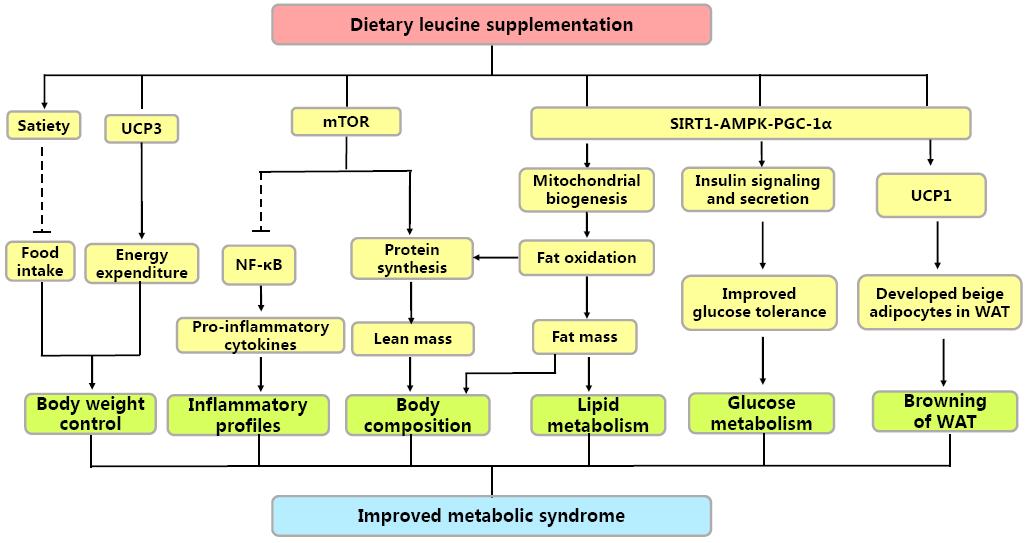
Recently, a team of researchers from China Agricultural University, and the Institute of Subtropical Agriculture of Chinese Academy of Sciences (ISA) highlight leucine, an essential and branched-amino acid, as a compound with potential therapeutic value towards obesity an...

86-10-68597521 (day)
86-10-68597289 (night)

52 Sanlihe Rd., Xicheng District,
Beijing, China (100864)
Copyright © 2002 - Chinese Academy of Sciences


